



Burnsville Mazda CX-5 VS CR-V
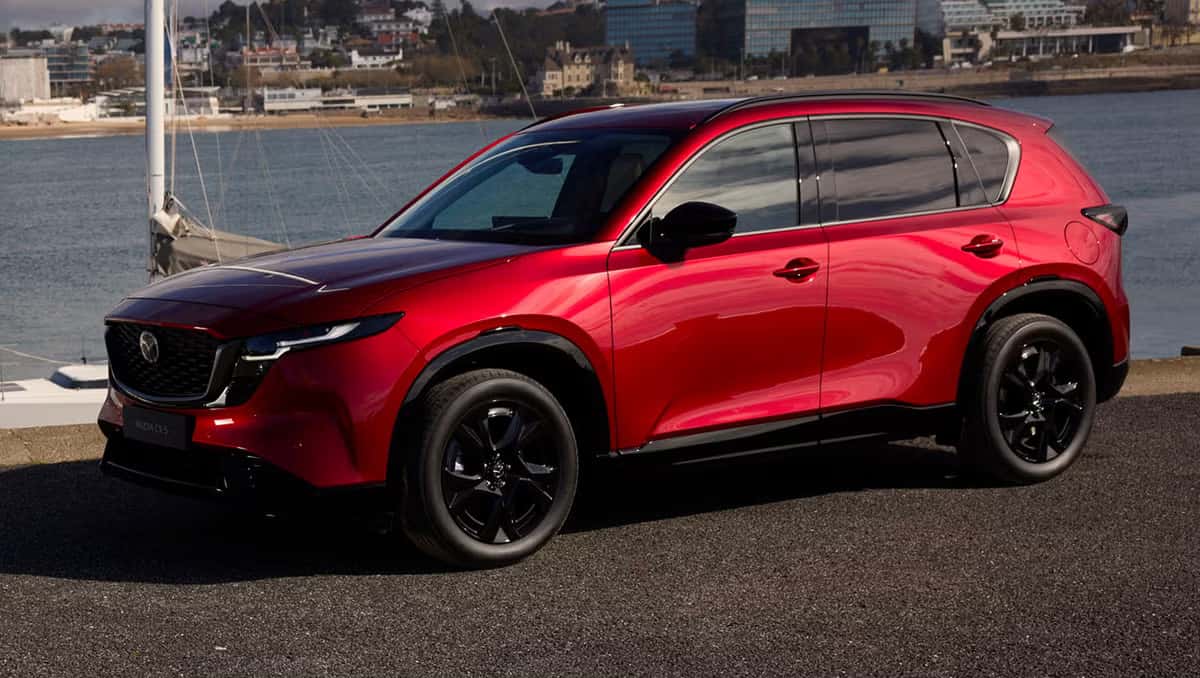
Shopping for a new compact SUV? You have probably already narrowed it down to two of the best options on the market: the 2026 Mazda CX-5 and the 2026 Honda CR-V Hybrid. It is a smart short list. Both are practical, well-built, and loaded with features. But they take very different approaches to earning your business.
The all-new 2026 Mazda CX-5 just launched as a fully redesigned third-generation model — bigger, smarter, and more premium than ever before. The 2026 Honda CR-V Hybrid is a proven, refined vehicle with one of the best fuel economy ratings in the segment.
So which one is right for you? We break it all down below.
Call Us To Schedule A Test Drive At Walser Burnsville Mazda
2026 Mazda CX-5 vs. 2026 Honda CR-V Hybrid: Quick Overview
Before we get into the details, here is the short version. The CX-5 wins on standard AWD, price, technology, design, and driving dynamics. The CR-V Hybrid wins on fuel economy and total cargo space. If you drive a lot of highway miles and fuel savings are your top priority, the hybrid makes a compelling case. For everyone else — especially drivers in Minnesota who want AWD, premium features, and an SUV that is genuinely fun to drive — the new CX-5 is the stronger choice.
Mazda CX-5 vs. Honda CR-V Specs Comparison
Here is a side-by-side look at how the two vehicles compare on the numbers that matter most.
| Spec | 2026 Mazda CX-5 | 2026 Honda CR-V Hybrid |
|---|---|---|
| Starting MSRP (with AWD) | $31,485 — AWD always included | $37,130 (Sport Hybrid AWD) |
| Engine | 2.5L 4-cylinder SKYACTIV-G | 2.0L 4-cylinder + electric motor |
| Horsepower | 187 hp | 204 hp |
| Torque | 186 lb-ft | 247 lb-ft |
| Transmission | 6-speed automatic | e-CVT |
| AWD | Standard on ALL trims | Optional on most trims (+$1,500) |
| MPG Combined (AWD) | 26 MPG | 37 MPG |
| Touchscreen | 12.9″ standard / 15.6″ available | 9″ standard |
| Digital Instrument Cluster | 10.25″ | 7.0″ |
| Head-Up Display | Standard | Not available |
| Google Built-in | Standard | Not on most trims |
| 360-Degree Camera | Available | Not available |
| Panoramic Moonroof | Available | Not available |
| Ventilated Seats | Available | Not available |
| Rear Seat Fold | 40/20/40 (center folds independently) | 60/40 |
| Cargo Space (seats up) | 33.7 cu. ft. | ~36.3 cu. ft. |
| Towing Capacity | 1,500 lb. | 1,000 lb. |
| Hybrid Battery Warranty | N/A (hybrid coming 2027) | 8 years / 100,000 miles |
CX-5 Preferred vs. Honda CR-V EX AWD: Same Price, Very Different Features
One of the most common cross-shops happens right in the middle of each lineup. The CX-5 Preferred comes in at $34,250 and the CR-V EX AWD at $34,650 — a difference of just $400. Here is what you actually get for that money.
| Feature | CX-5 Preferred ($34,250) | CR-V EX AWD ($34,650) |
|---|---|---|
| Head-Up Display | ✓ Standard | Not available on any CR-V trim |
| Center Touchscreen | 12.9 inches | 9.0 inches (43% smaller) |
| Digital Instrument Cluster | 10.25 inches | 7.0 inches |
| Google Built-in | ✓ Standard | Not available on this trim |
| Power Liftgate | ✓ Standard | Not available on EX trim |
| HomeLink Garage Opener | ✓ Standard | Dealer-installed accessory only |
| AWD | ✓ Already included in price | This IS the AWD premium price |
| Rear Seat Configuration | 40/20/40 split | 60/40 split only |
At virtually the same price, the CX-5 Preferred delivers a significantly larger touchscreen, a standard head-up display the CR-V does not offer at any trim level, native Google Built-in, a power liftgate, AWD already in the price, and a more versatile rear seat configuration. The value difference at this price point is hard to ignore.
Price: Mazda CX-5 vs. Honda CR-V Hybrid
The 2026 CX-5 starts at $31,485 including destination — with AWD standard on every trim. To get a comparably equipped AWD CR-V Hybrid, you are looking at $37,130 for the entry Sport Hybrid AWD trim. That is a $5,645 difference before you even start comparing features.
Across the full lineup, the CX-5 runs from $31,485 to $40,485 with AWD included at every level. The CR-V Hybrid AWD trims range from $37,130 up to $42,250 for the Sport Touring.
For most buyers, the CX-5 simply delivers more for less.
Exterior Design
The 2026 CX-5 arrived with a major design update. Mazda applied its latest KODO: Soul of Motion design language — borrowing sharper, more mature lines from the larger CX-90. The result is an SUV that genuinely looks premium without trying too hard.
On lighting, the CX-5 goes further than the CR-V with adaptive projector LED headlights that physically pivot in corners and full LED taillamps — the CR-V uses incandescent bulbs for its turn signals. Power-folding heated mirrors are also standard on the CX-5. The CX-5 also has a 500 lb. towing advantage, maxing out at 1,500 lbs. compared to 1,000 lbs. for the CR-V Hybrid.
Both vehicles come in at nearly identical lengths — 184.6 inches for the CX-5 and 184.8 inches for the CR-V — but the overall stance and styling of the CX-5 is notably more distinctive.
Performance and Driving Feel
On paper, the CR-V Hybrid has more power. Its 2.0L hybrid powertrain produces 204 hp and 247 lb-ft of torque, reaching 60 mph in about 8.0 seconds. The CX-5’s SKYACTIV-G 2.5L produces 187 hp and 186 lb-ft, with a 0-60 time of around 9.6 seconds.
But driving feel is a different conversation entirely. The CX-5 pairs its engine with a traditional 6-speed automatic transmission — not a CVT — which gives it more predictable, engaging throttle response. Mazda builds every vehicle around the philosophy of Jinba Ittai, or horse and rider as one, and you feel it the moment you drive one. The CX-5 handles more like a sport car than a crossover. On Minnesota’s mix of city streets, highways, and back roads, that kind of confident, connected feel makes a real difference in everyday driving.
The CR-V Hybrid’s e-CVT is smooth and frictionless in traffic, which works well for commuting. If effortless daily driving is the goal, the hybrid delivers. If you want an SUV that is actually fun to drive, the CX-5 is the clear choice.
Fuel Economy: CX-5 vs. CR-V Hybrid MPG
This is where the CR-V Hybrid makes its strongest argument. The 2026 CX-5 earns EPA estimates of 24 city / 30 highway / 26 combined MPG. The CR-V Hybrid AWD achieves a genuinely impressive 40 city / 34 highway / 37 combined MPG.
At 15,000 miles per year and $3.50 per gallon, that difference adds up to roughly $750 to $900 in annual fuel savings for the CR-V Hybrid driver. Over five years, the savings can meaningfully close the gap on the CR-V’s higher purchase price.
One important note for CX-5 fans: Mazda has confirmed a CX-5 Hybrid is coming in 2027. If fuel efficiency is your top priority but you love the Mazda experience, waiting one model year may be worth it.
Interior, Technology, and Space
Cabin Quality
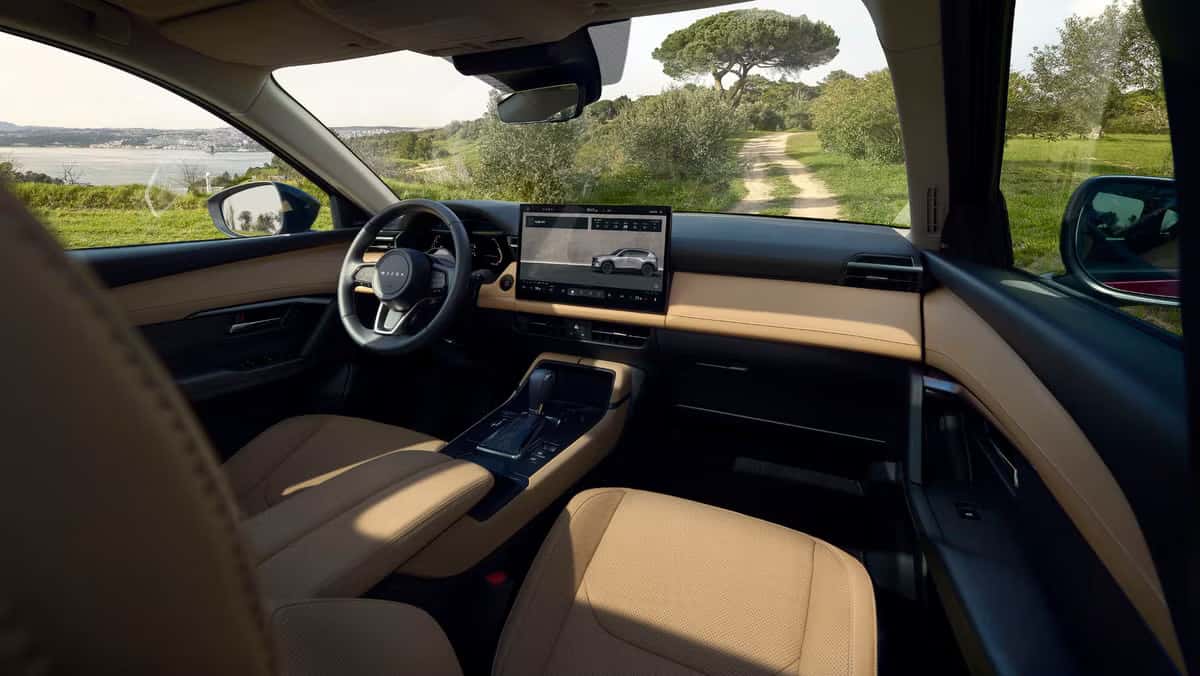
The 2026 CX-5 interior is widely regarded as the most premium-feeling cabin in the compact SUV class. Mazda’s design philosophy treats quality materials and thoughtful ergonomics as the starting point, not an upgrade. Upper trims include real leather seats with 10-way power adjustment, heating, memory, and available seat ventilation — something Honda does not offer on the CR-V at any trim level.
One honest note: the 2026 CX-5 redesign replaced some soft-touch materials with hard plastics on certain panels compared to the outgoing model. In a direct comparison, the CR-V may edge out the CX-5 at specific touch points. That said, the overall cabin presentation of the CX-5 still reads as more refined and intentional.
Technology
Mazda made a dramatic statement here. The 2026 CX-5 is the first Mazda vehicle to feature Google Built-in, comes standard with a 12.9-inch touchscreen (with an available 15.6-inch display on top trims), and includes a 10.25-inch digital instrument cluster and a standard Active Driving Display (head-up display). The CR-V’s standard screen is 9 inches — 43% smaller than the CX-5’s base display — and it does not offer a HUD at any trim level.
One trade-off worth knowing: the CX-5 integrates its climate controls into the touchscreen, removing physical knobs. The CR-V keeps physical dials for climate and volume, which is easier to adjust while driving without looking away from the road.
Passenger and Cargo Space
The all-new CX-5 grew 4.5 inches in length, bringing rear legroom to 39.9 inches. The CR-V Hybrid offers approximately 41 inches of rear legroom and a slightly larger cargo hold — about 36.3 cubic feet behind the rear seats compared to 33.7 in the CX-5.
Where the CX-5 has an advantage: its 40/20/40 rear seat fold lets the center section fold independently, so you can carry long items like skis or lumber through the cabin while keeping two rear passengers seated. The CR-V’s 60/40 split does not offer that flexibility.
Safety Features
Both vehicles come with comprehensive driver-assistance technology as standard equipment. But the redesigned 2026 CX-5 set a new standard by making the following features standard on every single trim, including the base model:
- Rear Automatic Emergency Braking
- Rear Cross Traffic Braking
- Forward Turn-Across Traffic Braking
- Emergency Lane Keeping
- Blind Spot Assist with Evasive Steering
- Traffic Sign Recognition
- Mazda Radar Cruise Control with Speed Limit Assist
- Driver Attention Monitoring
Honda Sensing on the CR-V Hybrid is equally well-regarded, covering Lane Keeping Assist, Collision Mitigation Braking, Road Departure Mitigation, and Adaptive Cruise Control. Both systems rank among the best in the segment.
The CR-V Hybrid does offer one meaningful long-term advantage: its 8-year / 100,000-mile hybrid battery warranty, which adds peace of mind for drivers who plan to keep the vehicle for many years.
2026 Mazda CX-5 vs. 2026 Honda CR-V Hybrid: Which Is Better?
Here is the honest answer.
Choose the 2026 Mazda CX-5 if: You want AWD included in the price, a more premium interior, a dramatically larger touchscreen, a standard head-up display, better driving dynamics, and a freshly redesigned SUV that punches above its price class. It is the better value for most drivers — especially in Minnesota, where standard AWD matters every single winter.
Choose the 2026 Honda CR-V Hybrid if: Fuel economy is your number one priority. At 37 MPG combined with AWD, the CR-V Hybrid is in a different league on efficiency. If you log a lot of highway miles, the savings at the pump are real and they add up over time. It is also the better pick if maximum rear cargo space or physical climate controls are non-negotiable for you.
For most drivers, the all-new 2026 CX-5 wins this comparison. It costs less with AWD, gives you more technology, drives better, and looks better doing it. The redesign turned an already great SUV into something that genuinely raises the bar for the segment.
Frequently Asked Questions
Is the Honda CR-V better than the Mazda CX-5?
It depends on what matters most to you. The Honda CR-V Hybrid is better on fuel economy, earning up to 37 MPG with AWD compared to 26 MPG for the CX-5. It also has slightly more cargo volume and rear legroom. However, the 2026 Mazda CX-5 wins on price with AWD already included, technology, driving dynamics, safety features standard across all trims, exterior design, and overall premium feel. For most buyers in Minnesota, the CX-5 delivers more value per dollar.
Which SUV is better — Mazda or Honda?
Both brands are excellent and have well-earned reputations. Mazda leads in interior quality, driving dynamics, design, and standard AWD. Honda leads with the CR-V Hybrid on fuel efficiency, cargo space, and a decades-long best-seller track record. In the current generation, the redesigned 2026 Mazda CX-5 holds a clear advantage in technology, standard features, and total value. The CR-V Hybrid remains the fuel economy leader.
Which CR-V years should you stay away from?
The 2017 and 2018 Honda CR-V models had documented oil dilution issues — gasoline mixing into the engine oil — that were especially problematic in cold climates like Minnesota. The 2015 CR-V also had higher-than-average owner complaints about transmission and engine reliability. The current-generation CR-V (2023 and newer) has a significantly improved record. If you are shopping used, targeting a 2023 model year or newer is the safest approach.
What are the downsides of a Mazda CX-5?
The main downsides of the 2026 CX-5 are worth knowing before you buy:
- No hybrid yet — fuel economy is 26 MPG combined. A CX-5 Hybrid is confirmed for 2027.
- Touchscreen climate controls — the redesign removed physical climate knobs in favor of touchscreen integration, which is less convenient for quick adjustments while driving.
- Remote start requires an app — unlike the CR-V’s free lifetime key fob remote start, the CX-5 uses the MyMazda app with a subscription after the initial trial.
- Less cargo volume — 33.7 cu. ft. behind the rear seats versus approximately 36.3 in the CR-V Hybrid.
- No turbo engine in 2026 — the optional turbo from previous generations is not offered on the new model.
Despite these trade-offs, the 2026 CX-5 remains one of the strongest compact SUV values available. The redesign addressed the things drivers asked for most — more space, more technology, and a more premium feel — while keeping everything that made the CX-5 a driver’s favorite in the first place.
Come See the 2026 Mazda CX-5 for Yourself
Reading about it is one thing. Getting behind the wheel is another. Stop by Walser Burnsville Mazda in White Bear Lake oto see the all-new 2026 CX-5 in person, explore every trim level, and take it for a drive.
Once you get behind the wheel, it becomes a very easy decision.
0 comment(s) so far on Burnsville Mazda CX-5 VS CR-V